Tolulope Olasewere
Initially, I was going to title this series “IEDP Student Profiles.” I sat with that title for weeks, and before tonight I did not really understand why it did not feel right. In the past, when writing profiles, I have sent out Google Forms or Google Docs with questions for the person of interest to respond to. And then I would take those responses, and craft them into a single profile. Something about this time made that approach feel wrong, and here’s why: The truth is a profile is at best a representation, some description of a person or a thing of interest that is usually created for informational purposes. And there is nothing wrong with that. However, implicitly, a profile tells you that what is provided is enough. I ask you, what could it possibly mean to know someone enough?
There is a quote that says, “The only way to truly know someone is by being with them, by conversation.” – Eric Overby So, here I am presenting to you the first installment of our “In Conversation With…” series here at IEDP. I ask you to follow me on this journey of engaging in face-to-face conversation with my peers, who by the way, I am more than certain that no profile could ever capture enough. What I share with you will never be enough. Rather, I hope it encourages you to start conversations of your own, and to look not for representations or descriptions of the people around you, but for connections.
I am thoroughly convinced that there is no better person to begin this series with than our very own Umar:
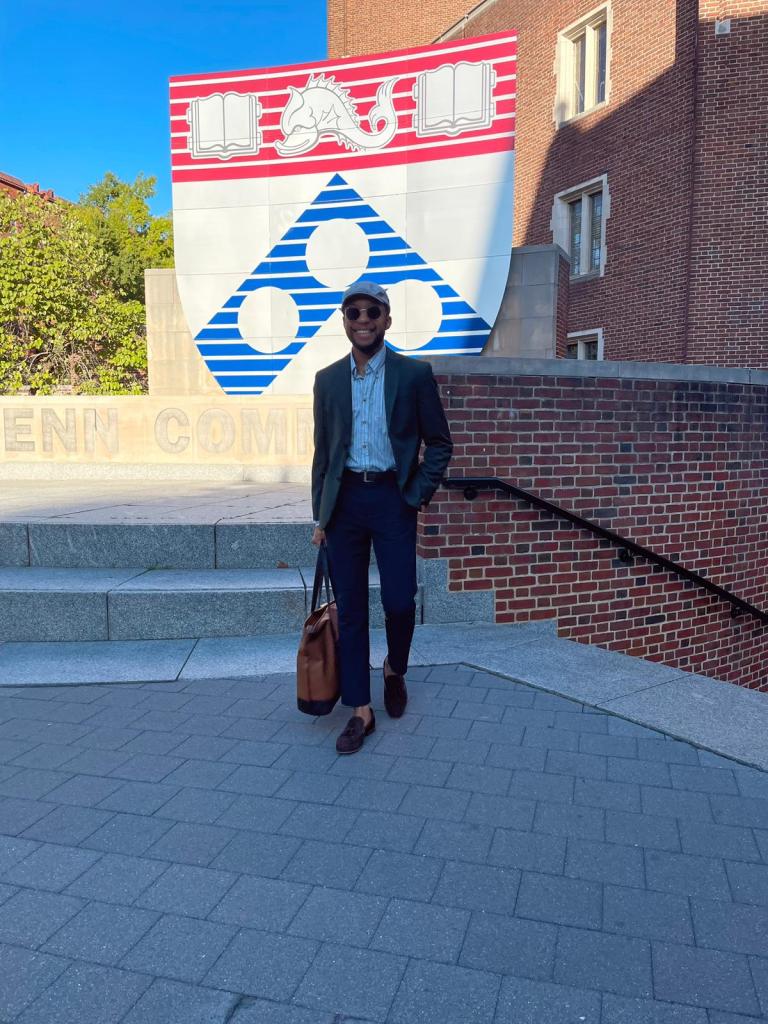
Tolulope: Umar, I am going to start by asking you to tell me a little bit about where you call home. What images or memories come to mind when you think of home?
Umar: I have multiple homes. The first thing that comes to mind is Maputo, Mozambique where I am very proud to be from. In Maputo, I was part of a diverse society characterized by various challenges, but also a lot of positive things. There was always so much happening at once that I had no choice but to grow. This is where I experienced my becoming into this individual who cares about social change. I mean, there is no Umar without Maputo.
Tolulope: You talk about this idea of “becoming.” What did that look like for you? Was there a specific moment that sparked this conscious feeling of becoming?
Umar: Honestly, I would have to go back to when I was very young. I was always a very calm and sociable child. I always had so many questions and always wanted to find answers. When confronted with problems, I always wanted to figure out what I could do to fix them. This led me to joining Organização Continuadores de Moçambique which was founded by the first president of Mozambique. Their goal was to educate children of Mozambique to become better citizens in the future, promoting patriotic values, respect for community, etc. That was where I started my social activism journey. It was also when I started asking myself questions about what kind of person I was, what kind of person I wanted to be, what I wanted to do in the future, and so on.
Tolulope: Thank you for sharing all of that with me. I wonder, have you ever lived anywhere else?
Umar: So, I lived in South Africa for 2 years where I was able to attend African Leadership Academy. ALA is a pan-African high school in South Africa that aims to develop the next generation of African leaders. That is where I completed high school. And then I moved to Japan where I did my undergraduate degree.
Tolulope: Thinking about your experience making a sort of home in all of these places, and I know we are only a little over a month into the semester, but what has the transition to the US been like for you so far?
Umar: I think adjusting is often a continuous process. So far, I would say I love this place, especially because of its diversity. I honestly did not expect Penn and Philadelphia to be so diverse. It makes me feel like I am less out of place. I think this has been the smoothest transition I have had. Maybe partly because of growth from past experiences. I think maybe part of the reason there is not much of a culture shock is the language component. When I moved to South Africa as a kid, I knew zero English and when I moved to Japan, I knew zero Japanese. That definitely made the process of transitioning more complex. But in the US and on campus, I would say I am very comfortable.
Tolulope: That’s so good! I think the language thing is definitely a big thing…
Umar: Oh yeah, for sure!
Tolulope: I think one of the big things that can make you feel so isolated is just not being able to speak the dominant language. It is so hard. I have never even lived anywhere that long but just the exposure I have had has been like…wow. I do not know how anyone does it. You are a champion. Although, I am very glad that you are comfortable on campus and in Philly.
Tolulope: Okay, what would you say is your favorite class this semester?
Umar: Ah, you want me to get in trouble with my professors!!
Tolulope: No, no, no. Just because it’s your favorite one doesn’t mean the other ones are not good. You know, this question is not just about the class, but more about what you value in a classroom environment and in collaborative learning with your peers.
Umar: So far, I would definitely say Monitoring and Evaluation…
Tolulope: *whispers* Dr. Thapa is the best.
Umar: I mean, he’s my advisor so maybe I am a bit biased.
Tolulope: Ah, so you have an agenda!
*we share a laugh*
Umar: Okay, but, I think he has allowed me to turn my fear of numbers into opportunity. I was very scared of numbers, and now being in his class makes me feel like I am capable. He makes me feel appreciated for what I know, and that I deserve to be here, which helps build my confidence. Monitoring and Evaluation is definitely one of those topics that is very important as a future practitioner or specialist in international education. I mean, we have to understand the impact of the programs, projects and policies that we do. So, having a clear understanding of how you can track and evaluate whether the work you are doing is done the right or the best possible way, is really important. I know we still have a lot to learn, but in just a month, I feel like I see what I am doing.
Tolulope: I completely agree with you! You know what’s funny is right before this chat, I was putting together a breakdown of what this organization I work for is hiring for, and I wrote down monitoring and evaluation. And for the first time, I used that vocabulary and understood that this is something that has value and that we should be looking for as an impact-driven organization. Just being able to take something so real-world just from one month of class is so valuable.
Umar: *nods* It is so valuable!
Tolulope: So, I am going to ask you, why did you choose PennGSE? I want you to try to think about what drew you to PennGSE. How did you know that taking the move to be here was the right thing for you in your life at that point?
Umar: A very simple answer: it was a pure coincidence, but also, I think it was something that was meant to happen. So, it was on October 10, 2022…
Tolulope: Oh my God, you know the date!!
Umar: I looked at the program. I did not look at the requirements. And I said, this is what I want. I did not care about the requirements; I knew I had to make it happen. Then of course I went deeper to try to understand the program and saw that it aligned with my goals and interests. I reached out to learn more and was encouraged to apply. And I gave it my 150%. The truth is as I began working on the application, I started becoming a little insecure. I thought about the prestige of Penn, and started wondering whether I was the right person to be there. But I pushed through. Also, of course, I thought about the network as well…but honestly, it was all very random. I did not even look up the best grad schools for education or anything like that. I mean, what are the odds?
Tolulope: You are meant to be here, that’s why! I believe in things aligning and in the universe. My whole life, I think, is a testament to that. So, I am very happy that you are here.
*we talk about something random for a bit*
Tolulope: I wonder, what are you most looking forward to getting out of IEDP?
Umar: I think we are being trained to become leaders within our field. I really hope that I can be very comfortable and confident to be out there and make the change that I want to see.
Tolulope: And you will. I am very excited to see all that I know you will do.
Tolulope: Having been here for some time now, what is something you would tell yourself on your first day on campus, or a future IEDPer?
Umar: Hmmm, I feel like I am not so great at giving advice. I tend to get a little too deep…
Tolulope: There is no such thing as too deep. I love the depth.
Umar: I am going to quote the former Dean of ALA who said, “You deserve to be here. And here deserves you to be.” Sort of appreciating and understanding that you are meant to be here, and that here is the right place for you. Also, be brave and be bold enough to navigate the challenges and turn them into opportunities. As leaders of tomorrow, we have to be very comfortable doing hard things, and I think that is one thing that PennGSE promotes. You have to be comfortable doing the hard work. I do have a lot of faith in us to create transformative impact across the world – this is what PennGSE is all about. We are surrounded by people who not only want to do amazing stuff but have already done amazing stuff. I really think that as long as we are intentional, we are going to make the world a better place.
Tolulope: This is true. I think there are very few spaces where you are surrounded by people who believe they can make change. I mean, there are people who kind of believe it, people who are very pragmatic, people who that’s not their goal or they want to make money, which is okay. But at PennGSE, it is concentrated. You walk in and you don’t feel like too much of an idealist because you are surrounded by people who are like, “Not only do I believe this but I have actually started doing this and I am going to continue doing this.” It is very inspiring.
Umar: When I came to Penn, the first day, the thought that I had in my mind immediately was, “The sky is no longer the limit.” It was like, I can and I am going to do it. All these insecurities and questions that I have had have all turned into opportunities. Now, I know it is possible. I have access to the resources and the opportunities, and myself. My confidence has increased from like 0.5% to 100%.
Tolulope: I love that you gave yourself a little 0.5%.
Umar: *laughs* It’s not that I did not have confidence before. It’s just that now I know that I can make things happen. I am very happy to be here, and I look forward to what Penn has to offer.
Tolulope: Okay, fun questions. What is your go-to karaoke song?
Umar: Danza Kuduro. You know this song.
Tolulope: I know it?!
Umar: I am so sure. You just don’t know the title. *searching on his phone*
Tolulope: Oh my God, now the pressure is on. What if I don’t know it?
*song plays*
Tolulope: Ha, I do know it!
*dance break*
Tolulope: Okay, milk before cereal or cereal before milk? This is a very divisive topic. I have lost friends over this.
Umar: Milk after cereal.
Tolulope: *content sigh of agreement* Exactly! Because then you’ll know exactly how much milk you need.
Umar: Exactly!
Tolulope: If your house or apartment caught on fire randomly, what is one material thing that you would save?
Umar: *mutters something that sounds like passport*
Tolulope: The passport?! *laughs* Honestly, gotta save that passport (and visa – international students know this struggle best).
Umar: I think I would save my photo album that has my baby pictures that have notes on the back. I think it is one of the most important things that I have. It has pictures of me and my family, and when I am homesick, I just look at them and think of how much of a long way I have come. I remember that I do have a family, friends, and people that care about me.
There you have it, readers. Thank you for taking the time to learn more about Umar. There were a lot of themes covered in this conversation, such as belonging, purpose and the things that lead us to where we find ourselves. For me, I am left thinking about what it means for the sky to no longer be the limit, and for the agency to create a reality beyond the stars to be (somewhat) in my hands. What will you take from this conversation with Umar?
See you next time.
This conversation is not a complete transcript and has been edited for the purpose of this blog with explicit consent from the participant.
 The International Educational Development Program
amazing !! can’t wait to see more!
LikeLike
This was a fun read, can’t wait for the next!!
LikeLike
Beautiful said 👏🏿
LikeLike
Like it
LikeLike
Umar is a wonderful personality and always inspires me!
LikeLike