
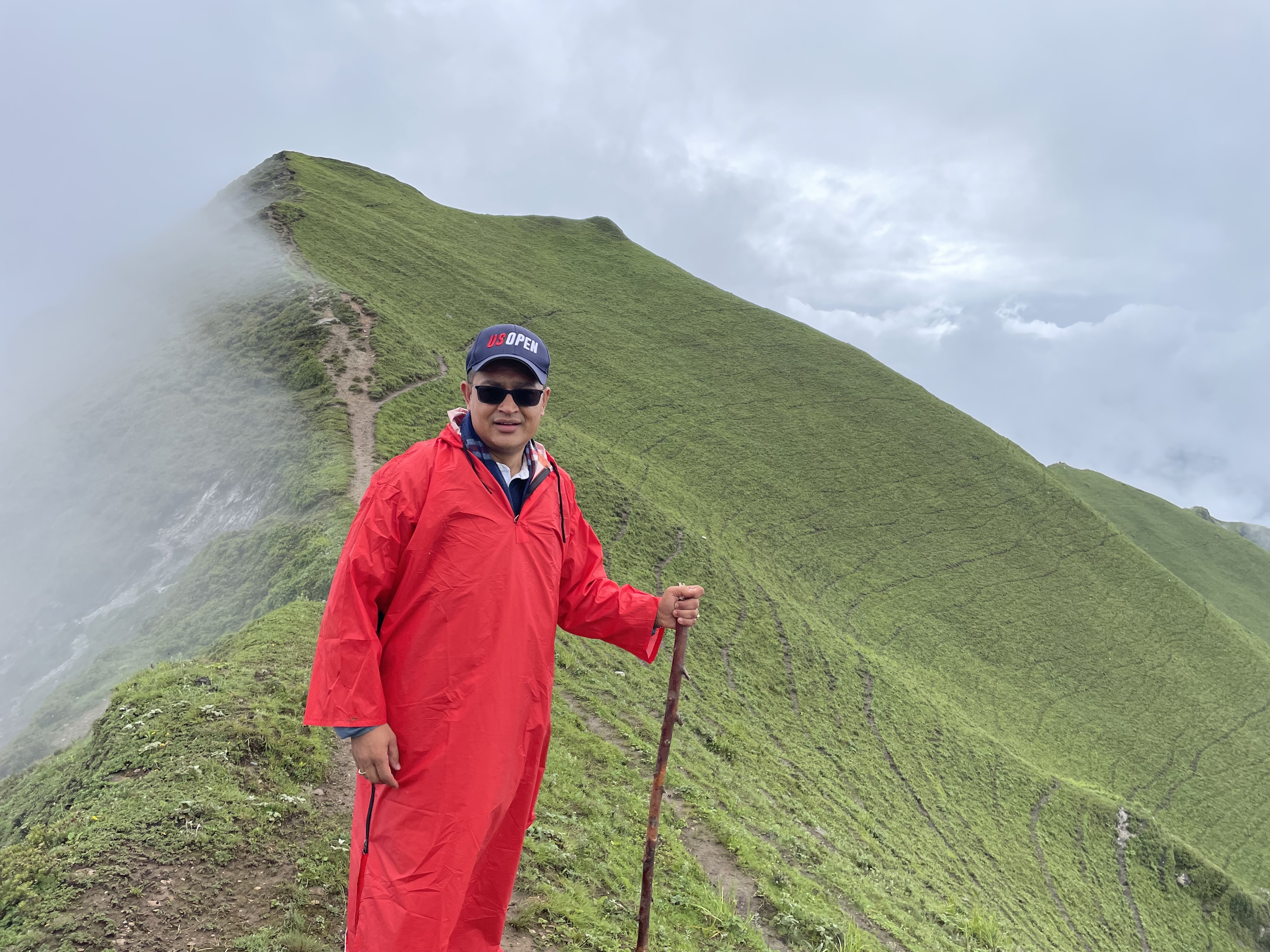
In this interview, Dr. Thapa shares his journey to the IEDP, the experiences that shaped his career, and his unique research interests. Read on to learn more!
How and why did you join IEDP?
After earning my PhD, I became a Research Director at the National School Climate Center in New York. I took leading roles in evaluating school climate projects and developing instruments on school climate and social-emotional learning. But teaching has always been a passion. My first job after my master’s involved teaching economics in the mornings and working at a bank in the afternoons in Nepal. I realized then that teaching was my calling. In 2015, calls with Dr. Wagner and Dr. GK helped me learn more about this wonderful program, and I became part of this fantastic team. That year, I joined Penn GSE’s IEDP as an adjunct, and by 2016, I was teaching full-time.
Growing up in Nepal, I witnessed poverty, inequality, and corruption, which made me interested in development economics. My focus has always been on understanding why some countries remain trapped in poverty while others thrive. I’m particularly drawn to education and development-related topics in low- and middle-income countries, though my work also includes high-income settings like the United States.
How did you become interested in the Economics of Education, Monitoring & Evaluation, and School Climate?
Initially, I was doing my PhD in mainstream economics, with a strong interest in development economics and macroeconomics. However, I wanted to apply these concepts practically, particularly in agriculture, health, and education. My interest shifted to economics of education, which led me to Professor Henry Levin at Columbia University. I transitioned from traditional economics to applied economics and was fortunate to land a position in an educational nonprofit organization where I could focus on real-world applications. My involvement in school climate came through my role as research director at the National School Climate Center. Monitoring & Evaluation became a focus as it’s essential in international education. I now teach two M&E courses (introductory and advanced), a course on economics of education in LMICs, and a course on global perspectives on school climate, which I’m excited to continue as the field grows.
Why do you think there is a growing interest in school climate?
While core subjects like math and science are essential, I believe education must also focus on producing responsible, engaged citizens. Social-emotional learning, moral values, and character education are crucial to this process. Teachers, students, and administrators often face huge challenges relating to bullying, school violence, handling student behavior, teacher burnout, etc. Having the appropriate coping mechanisms, resources, and support systems is especially important today as we deal with rising stress, mental health issues, and loneliness. Therefore, there is a rising interest in school climate and social-emotional learning among researchers, policymakers, and practitioners like today.
Do you also try to foster a friendly class environment?
Engagement is key in teaching. If students or teachers aren’t engaged, much of the effort is lost. I try incorporating stories, humor, and a positive approach to make learning enjoyable. Focusing on positivity helps counteract negativity and stress, which is important given the intense nature of the program. I try to remind students to take care of themselves, do deep breathing, get good sleep, and eat well to keep both physical and mental health in good condition.
What research are you currently working on?

I’m working on several projects. One new area I’m excited about is climate change and education. I’m collaborating with researchers at the Graduate School of Arts and Sciences on a project in India, hoping to expand to other low- and middle-income countries in Africa and other parts of the world. This research examines how climate change impacts learning in marginalized communities, where dropout rates are high and challenges are numerous. We aim to give policymakers insights into how climate change affects the most vulnerable.
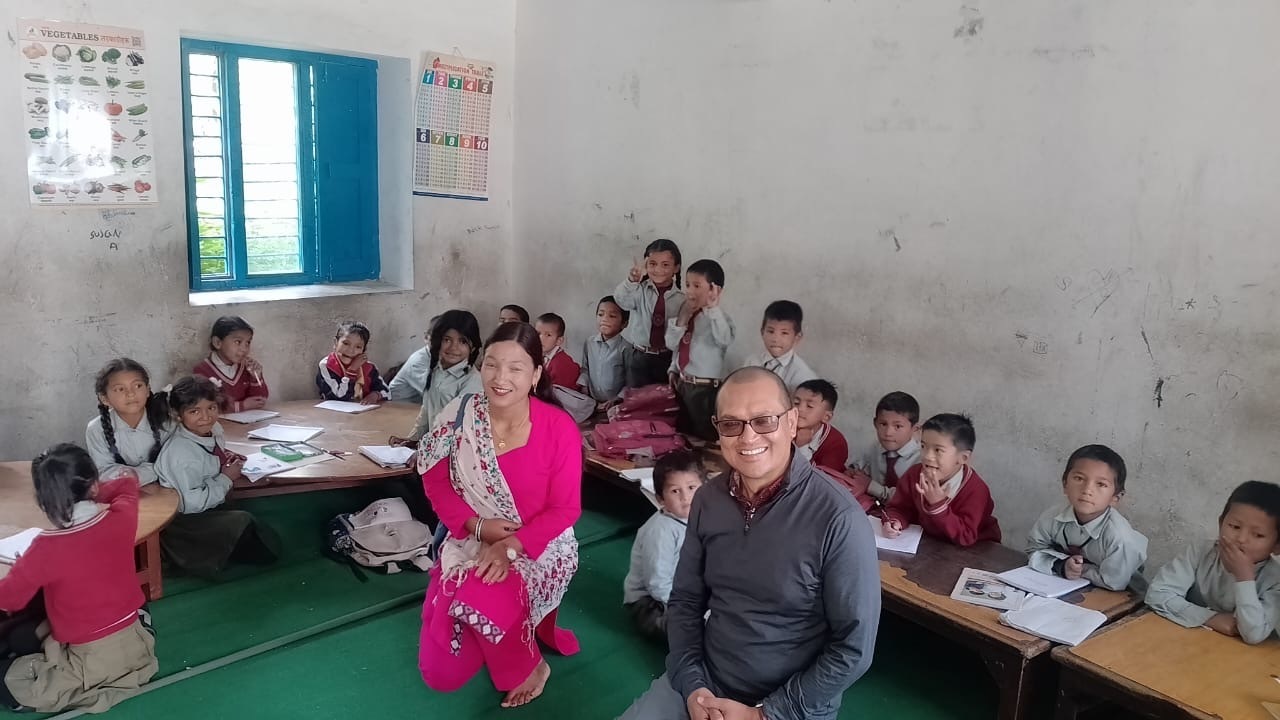
I’m also collaborating with Dr. Dan Wagner on learning equity and conducting a systematic literature review on school climate with Dr. Sharon Wolf and students from IEDP and GSE. Additionally, I’m working on a project in Nepal exploring education’s role in economic development. This mixed-methods research will form the basis of a book I hope to write in the coming years.
How do you manage your time and relax?
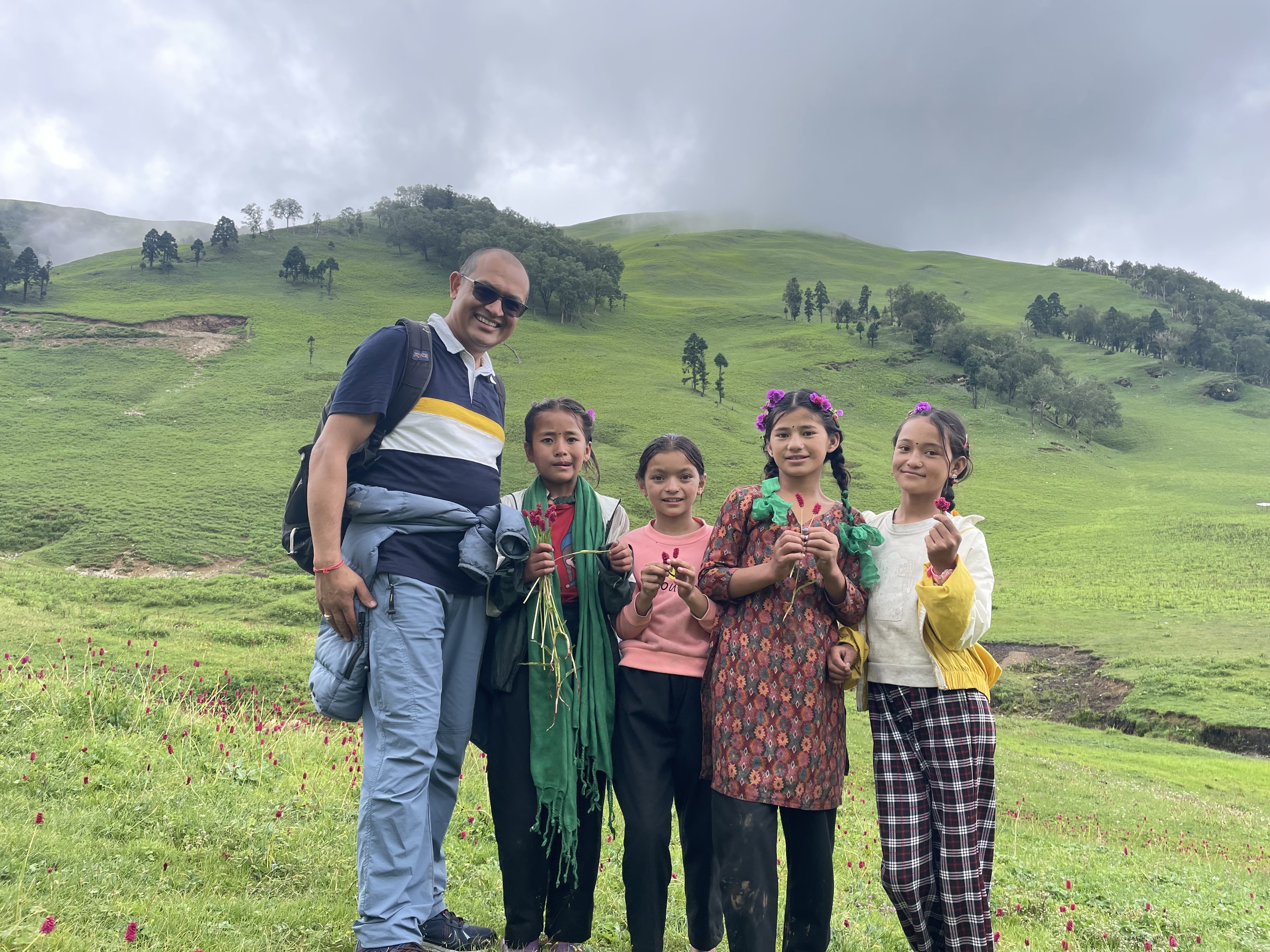
Time management can be challenging, so I prioritize what’s most important at any given moment. For relaxation, I try to engage myself in playing tennis, reading, writing poetry, traveling, and exploring new cultures. Music, especially soft music, helps me unwind, and when possible, I practice breathing exercises, simple meditations, and yoga. Engaging in these activities helps maintain a healthy balance. Just as we exercise for physical health, caring for our minds is crucial for overall well-being. I want to end by saying, “A sound body leads to a sound mind, and a sound mind leads to a sound body”. Sounds good 🙂
Interview by Sveta, edited by Ana
 The International Educational Development Program